The short answer: Welding is the process of joining materials — usually metals — using heat, pressure, or both. This guide covers the main welding types and how they are used in industry
Welding is a fabrication process that joins two or more materials — typically metals — by using heat, pressure, or both to fuse them together. The result is a joint that, when performed correctly, is as strong as or stronger than the base material.
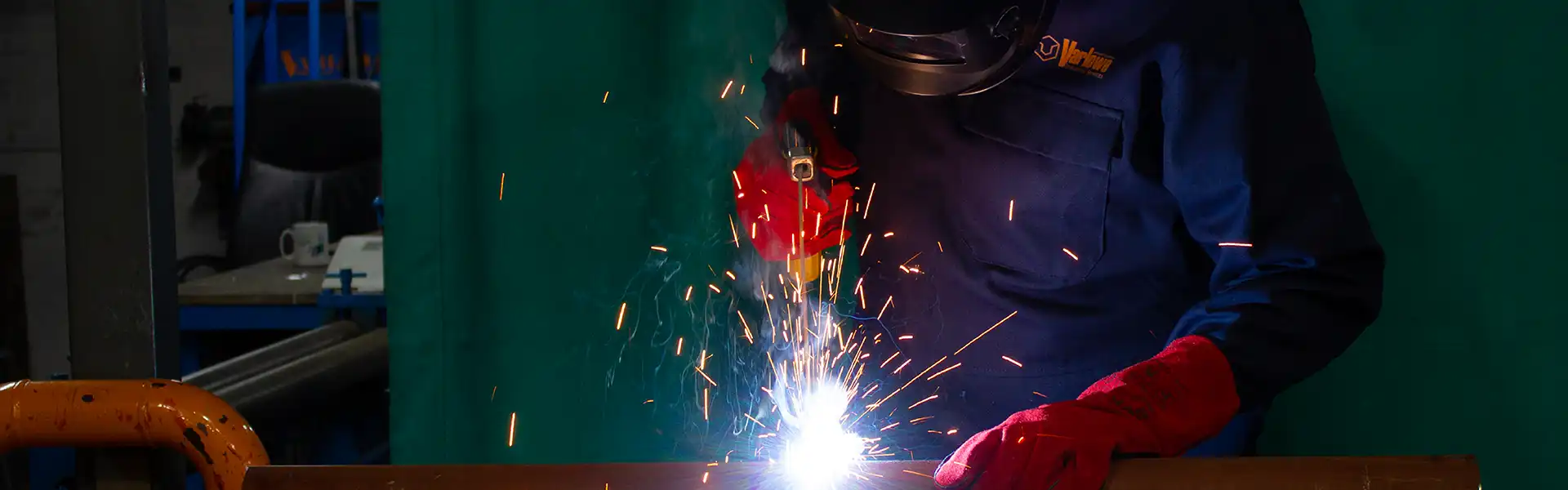
Most industrial welding processes generate an electric arc between an electrode and the base metal, producing intense heat that melts the metal at the joint. A filler material is added to the molten pool, which then cools and solidifies to form the weld. A shielding gas or flux is typically used to protect the molten pool from atmospheric contamination.
There are over 30 recognised welding processes. The most common in industrial fabrication are:
Read our full guide: Welding Types
Welding is used across virtually every manufacturing and construction sector — structural steelwork, pressure vessels, pipework, automotive, aerospace, shipbuilding, and general fabrication. It is the primary method for creating permanent, load-bearing joints in metal structures.
Welding is one process within the broader discipline of steel fabrication. Fabrication includes cutting, forming, drilling, and assembly — welding is the joining step. Read: Welding vs Fabrication.
Varlowe Industrial Services provides coded welding, fabrication, and mobile welding from our Wolverhampton base. Our Class 1 coded welders hold BS EN ISO 9606 qualifications. Visit our Welding Services page or explore Steel Fabrication and Pipework Fabrication.
For enquiries, contact us at info@varlowe.co.uk or via the contact page.
Welding is the process of permanently joining two or more materials — usually metals — by applying heat, pressure, or both to melt the materials together and allow them to fuse as they cool. The result is a joint that is typically as strong as or stronger than the base material.
The most common welding processes in industrial use are MIG welding (GMAW), TIG welding (GTAW), MMA or stick welding (SMAW), and flux-cored arc welding (FCAW). Each has distinct characteristics and is suited to different materials, thicknesses, and applications.
Welding is one of several joining processes used within fabrication. Fabrication is the broader process of cutting, shaping, forming, and assembling metal components into a finished structure or product. Welding is a key part of fabrication but not the whole of it.
Most metals can be welded, including mild steel, stainless steel, aluminium, copper, titanium, and nickel alloys. Some metals require specialist processes or techniques — for example, aluminium requires TIG or MIG welding with specific shielding gases, and titanium requires full inert gas protection.
For structural, load-bearing, or safety-critical applications — including structural steelwork, pressure pipework, and industrial plant — welds should be performed by a welder qualified to BS EN ISO 9606. Coded welding provides documented assurance of weld quality.