
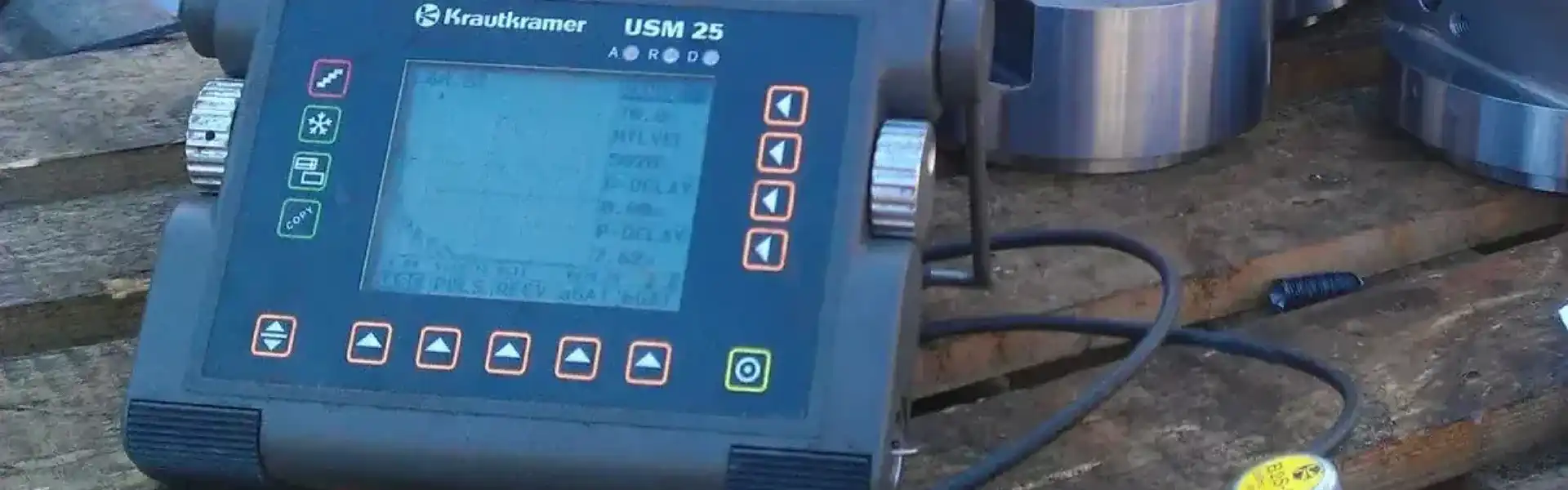
The short answer: NDT testing explained — methods including ultrasonic, radiographic, and magnetic particle testing used in industrial inspection
Non-Destructive Testing (NDT) is a way of testing and evaluating welds, materials, and components without causing damage. It is used to verify weld quality, detect flaws, and ensure structural integrity in safety-critical applications.
Read more: Non-destructive testing on Wikipedia.
NDT is required on safety-critical welds — including pressure vessels, structural steelwork, and pipework. The relevant welding code or specification will define which NDT methods are required and the acceptance criteria.
Varlowe’s welding services include coded welding where NDT inspection is a standard part of quality assurance. Our coded welders work to BS EN ISO 9606 and produce work that meets NDT requirements.
NDT stands for Non-Destructive Testing — a group of inspection techniques used to evaluate the integrity of materials, components, and welds without causing damage or rendering them unfit for service. NDT is used to detect cracks, voids, inclusions, lack of fusion, and other discontinuities that could cause failure in service.
The principal NDT methods used in industrial inspection are: Visual Testing (VT), Ultrasonic Testing (UT), Radiographic Testing (RT), Magnetic Particle Testing (MT), Dye Penetrant Testing (PT), and Eddy Current Testing (ET). Method selection depends on the material, defect type being sought, access constraints, and the applicable standard.
NDT is required on structural, pressure-bearing, or safety-critical welds as part of quality assurance during fabrication. The applicable standard — such as BS EN ISO 5817 for steel, or ASME Section IX for pressure vessels — specifies acceptable defect levels and the inspection methods and extent required.
Destructive testing involves physically breaking or sectioning a specimen to measure properties such as tensile strength, impact toughness, or hardness. NDT achieves inspection without causing damage, allowing the tested component to remain in service. NDT is used for in-service inspection and on production welds that cannot be sacrificed for testing.
Whether NDT is required depends on the application, material, and applicable standard or client specification. Pressure vessels, pipework operating above certain pressure/temperature thresholds, structural steelwork for public safety, and lifting equipment all typically require NDT as part of inspection and certification. Your fabrication contractor should advise on the applicable requirements.