The short answer: Pipe fitters explained — what they do, the skills required, and how industrial pipe fitting differs from plumbing. Written by Varlowe's pipework team in Wolverhampton
Pipefitters install, maintain and repair various piping systems using advanced technical expertise and highly specialised skills.
They create safe and stable systems to ensure leak-free transportation of liquids/gases from the source to the point of use.
These substances range from essential utilities to high-pressure steam, hydraulic fluid, and highly volatile chemicals.
Pipefitters work in industrial environments like refineries, factories, and energy plants. They also provide valuable support to critical settings such as hospitals.
According to EngineeringUK’s annual workforce report, the UK requires approximately 49,000 additional engineering and technology professionals every year to meet demand — with pipefitting and mechanical engineering services consistently identified among the trades facing the greatest recruitment pressure as experienced trades workers retire.
A lot of skills are needed in pipefitting, including:
Primarily working in commercial, industrial and manufacturing settings, Pipefitters are responsible for installing, assembling, maintaining, and repairing piping systems.
They often plan systems and use various methods to install the pipe according to required specifications, typically in carbon steel, stainless steel, and metal alloys.
The engineers will also perform troubleshooting and repairs to ensure the system is fit for use.
Pipefitters use many skills to assemble and repair pipes, such as:
The pipe fit process is often in live buildings, meaning they must ensure that every pipeline or component is sound and suitable to be connected to the rest of the system.
A significant difference between pipe fitters and plumbers is the type of systems they work on. Plumbers typically work with water supply systems in residential properties, while pipe fitters work in industrial and commercial environments involving fuel, gas, steam, and high-pressure systems.
As a result, pipe fitters must have a deep understanding of the physical properties of the pipes and fluids and the ability to calculate the correct materials, equipment, and design for each specific job.
As pipe fitting is a technical discipline, it involves a number of required qualifications and training.
The typical requirements are:
It is also possible to take an Access to Higher Education qualification if you don't have the necessary GCSEs to gain entry to university.
Pipe fitters are used in a wide range of industries, such as:
Varlowe Industrial Services provides expert pipework fabrication and installation, including carbon steel, stainless steel, and specialist alloy pipe systems.
Our pipework team works to strict specifications across process, utility, and industrial applications. Contact us to discuss your pipework requirements.
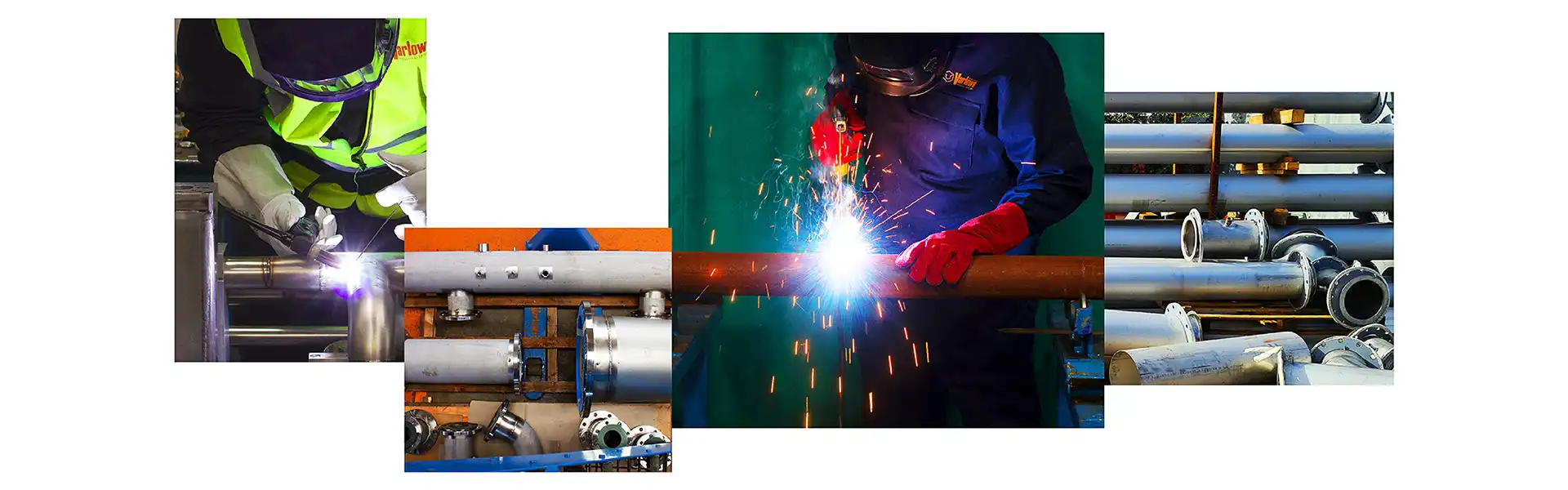
A pipe fitter designs, installs, maintains, and repairs piping systems that carry gases, liquids, and other substances under pressure. Industrial pipe fitters work on complex systems across manufacturing, oil and gas, power generation, and chemical processing, using specialist skills in cutting, bending, welding, and testing pipework to specification.
Plumbers primarily work with water supply and drainage in residential and light commercial buildings. Pipe fitters work on industrial piping systems carrying steam, gas, chemicals, and high-pressure fluids. Pipe fitters work to stricter engineering tolerances and are trained in materials such as carbon steel, stainless steel, and specialist alloys.
Industrial pipe fitters typically hold an apprenticeship qualification in mechanical engineering services or pipefitting, alongside relevant NVQ or City & Guilds qualifications. For pressure pipework, coded welding certification to BS EN ISO 9606 is often required. Varlowe's pipe fitters hold the relevant qualifications for the industrial sectors we serve.
Industrial pipework is fabricated from carbon steel, stainless steel, duplex stainless steel, copper alloys, and high-performance plastics such as HDPE, depending on the fluid, pressure, and temperature requirements of the system. Varlowe works across carbon and stainless steel pipe systems for process and utility applications.
Yes. Varlowe Industrial Services provides pipework fabrication and installation from our Wolverhampton facility, covering both workshop fabrication and site installation. Our services include industrial process pipework, utility systems, pressure testing, and pre-fabricated spool assemblies for planned and emergency works.